A Model for Personal Devotions
A practical blueprint for making the most of 20–30 minutes in personal spiritual disciplines, with Relational Reading as one of its key elements.

Bible reading and meditation are important spiritual disciplines for growing in Christ, but many of us struggle to do them well. Sometimes, our personal devotions feel burdensome, unhelpful, or even boring. We may finish a passage without remembering it, feel distracted, or sense little impact on our lives. These challenges are not unusual—but they are often signs of underdeveloped devotional habits.
The good news is that they are easy to fix. When addressed, our personal devotions can open the door to profound intimacy with God and a deeper personal relationship with Him—sometimes unlike anything you’ve experienced before, or perhaps something you’ve experienced in the past but have recently felt lacking.
A practical blueprint for making the most of 20–30 minutes in personal spiritual disciplines, with Relational Reading as one of its key elements.
A powerful, four-step process for engaging with God relationally through Scripture and experiencing transformation from the inside out.
A self-paced Bible reading plan designed to provide well-spaced literary variety for contemplative personal devotions.
There are two main ways to read and interact with the Bible: third-person engagement and first/second-person engagement.
It is important to recognize that academic study and devotional study are not opposed to one another. Serious intellectual engagement supports our devotional engagement. The better we understand the text and the truths being studied, the better we can experience them in the context of our own personal relationship with God. For this reason, we recommend using a study resource during personal devotions to help ensure a more accurate understanding of the text.
During personal devotions, we recommend using a simple, relational approach to Bible reading. This resource is designed to be used alongside our Model for Personal Devotions and should be preceded by the Ask, Study, and Read elements outlined there. When starting out, it can be helpful to keep the Quick Guide nearby and walk through each step diligently. Over time, the process will become second nature, and you’ll move fluidly between reflection, reaction, and response without needing a guide.
Do everything out loud—including reading, reflection, and prayer. Speaking aloud helps with focus, reduces distraction, improves retention through both hearing and speaking, and forces greater clarity by formulating thoughts into complete sentences. If you’re skeptical about this practice (or the approach in general), try it for a week and see how it goes! The blessing might surprise you.
Each of the steps below should also be done prayerfully and relationally. You are not just speaking about God; you are speaking aloud before Him and to Him, in His presence.
1. Reflect
Begin by reflecting on the passage from a first- or second-person perspective—“you” and “I”—addressing the Father, Son, or Spirit directly. Think on what you personally need to consider about God, about yourself, and about Jesus in light of this passage. What you personally need to consider about God, Jesus, or yourself from the text may not be the same as what someone else needs to consider. There may be many things you could reflect on, but contemplate those which are especially pertinent to you.
General applications must be made specific to you. For example, Scripture may call husbands to love their wives, but reflection here asks what that means for you in the context of your own relationship with God—you are called to love your wife. And for you specifically, that would like you doing X, stopping Y, changing Z. Get down to the personal, specific, concrete implications for yourself.
2. React
Each step builds on the previous ones. Next, express your genuine reaction to God based on what you have reflected on. How does this make you feel? If you feel joy, conviction, gratitude, confusion, or even nothing at all, be honest about it and say so to God. If you do not actually feel much but should, take time to consider why that might be the case.
3. Respond
Based on your reflections and reaction, respond to God using the ACTS acronym as a guide. Make each element specific and personal to you:
If this is the main time you will spend in prayer that day, include any other kinds of prayers as well, even if they are not connected to the passage.
4. Reform
Christianity is concerned with real internal change that produces visible fruit in our lives, not merely with external behavior modification. Verbally describe the heart transformation that should lead to life transformation in light of the previous steps, moving from the inside out. This can often be summarized in a statement like, “This makes me…, therefore I will…”
Then create a single, specific, and doable action step to take. Each of those qualities is important. Choose a single step because it is harder to focus on and achieve multiple goals at once. Ensure the step is specific, since vague intentions make it difficult to know what to do or whether you have done it. And since you want to actually take that step, it must also be doable and realistic.
Charles Spurgeon
CCC’s Quick Guide for Personal Devotions is available to download for free in two formats.
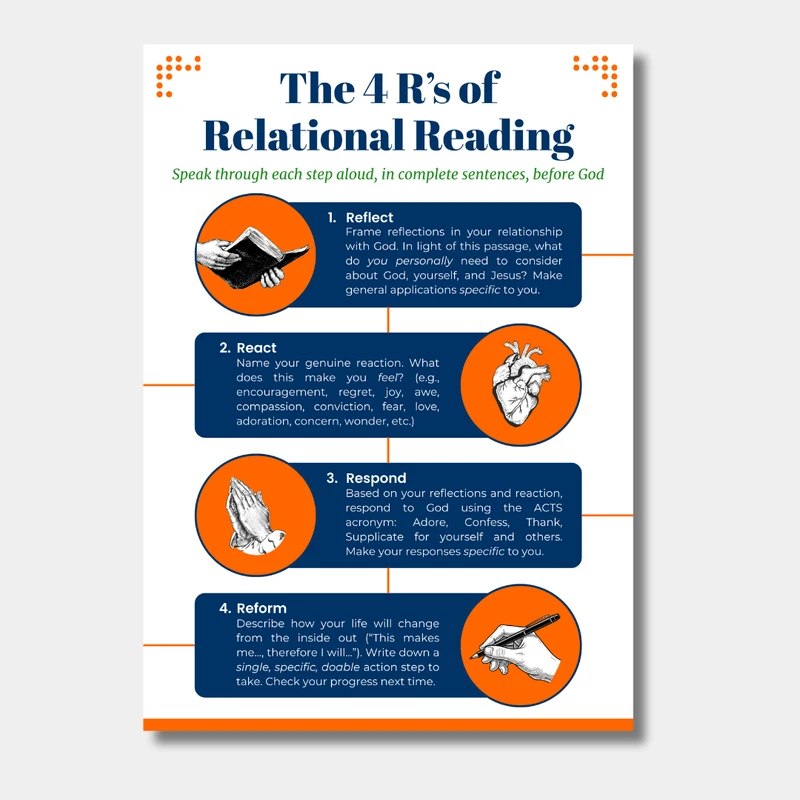
A full-color 5″ × 7″ Quick Guide with our Model for Personal Devotions on the reverse, sized to keep in your Bible. Available for pickup at the Resource Shelf.
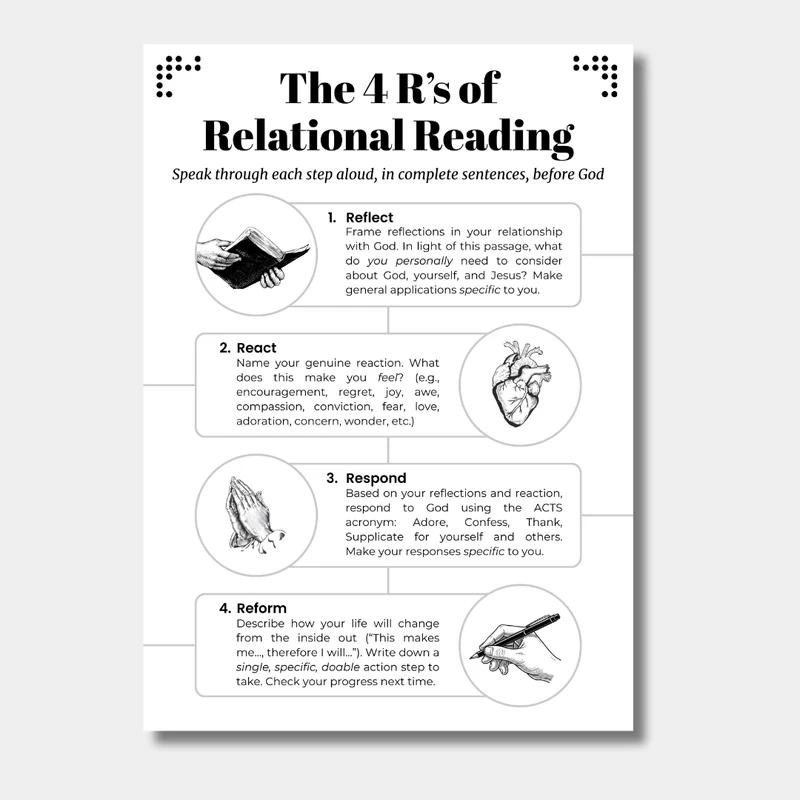
A printer-friendly version that uses less ink and folds in half to fit neatly inside your Bible.